
Benchmark equity indices Sensex and Nifty closed higher on Friday after two days of fall, helped by buying in metal, telecom and auto stocks amid a firm trend in global markets. Automakers led by Maruti Suzuki India, Hyundai, Mahindra & Mahindra reporting robust wholesales of passenger vehicles and GST collections crossing Rs 1.50 lakh crore for the third straight month in May also added to the optimism. The 30-share BSE Sensex climbed 118.57 points or 0.19 per cent to settle at 62,547.11.

Auto companies are now grappling with a slowdown in sales, triggered by pent up demand due to the COVID-led lockdown easing a bit and supply-side issues for raw material.

Maruti Ciaz and Ertiga are exempt from the infrastructure cess and so, there is no change in the prices of these models.

Maruti, Hyundai & Mahindra together had 72.5% market share in year's first half.

India will not tailor its policies to suit US EV maker Tesla, and its laws and tariff rules will be formulated to attract all-electric vehicle manufacturers from across the world to set up a base in the world's fastest-growing economy, Commerce and Industry Minister Piyush Goyal said. Tesla has been seeking an initial tariff concession that would allow it to offset 70 per cent customs duty for cars priced less than $40,000, and 100 per cent for cars of higher value.
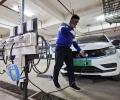
The government on Friday approved an electric-vehicle policy, under which duty concessions will be given to companies setting up manufacturing units in the country with a minimum investment of $500 million, a move aimed at attracting major global players like US-based Tesla. According to an official statement, the companies setting up manufacturing facilities for e-vehicles will be allowed to import a limited number of cars at lower customs duty. The policy seeks to promote India as a manufacturing destination for EVs and attract investment from reputed global EV manufacturers, it added.

Apart from a pavilion of vintage cars, there will be a Bollywood corner

With Onam and Raksha Bandhan just around the corner, the festival season is ready to kick off in full swing. As people embrace the celebratory spirit, companies anticipate a surge in sales this year. Consumer durables firms are expecting strong growth of 40-50 per cent in the premium segment during the upcoming season. Appliance makers also foresee increased demand for cooling appliances - refrigerators and air conditioners - which were impacted by unseasonal rainfall.

Hindustan Motors Limited of C K Birla group will launch multi-utility vehicle manufactured at its Uttarpara plant in the state.

The measures government takes next to push economic growth will be the key for automotive sector

'The decrease in the popularity of white cars and the rise in preference for darker colours like black, grey, and blue over the past three years reflect changing consumer attitudes.'

However, notable absentees from the expo will be Honda, Toyota, Ford, BMW, Audi, Lexus, Volvo and Jaguar Land Rover along with two-wheeler majors Hero MotoCorp, Bajaj Auto and TVS Motor Co.

Trend researchers who come from design schools and have an art and sociology background are the latest foot soldiers in the struggle of auto companies to stay ahead in the competitive race.

Maruti will showcase its first concept electric vehicle, the e-SURVIVOR; M&M it's six new EVs, including two futuristic concepts

The new tax regime has also been fuelling sale of SUVs, particularly the compact SUVs

The increase in PV sales in September was driven by festive season purchases, with SUV models like Maruti Suzuki's Brezza, Hyundai Creta, Mahindra Scorpio, Ford Ecosport and Honda W-RV witnessing good traction

Sales of four- and two-wheelers almost halved in August, compared to the equivalent month last year.

The Tata Safari is an SUV which was the big brash brutish bully of the road in the early 2000s before the Toyota Fortuner snatched that crown. The car's styling still harkens back to the pre-Zest era of Tata Motors but there is still a whole lot more than what meets the eye. Therefore, the people at MotorBeam decided to induct the powerful Varicor 400 variant of the new Tata Safari Storme in their long term fleet to test out whether the big burly beast is still relevant or not.
Despite a rise in input costs, leading car-makers refrain from hiking their price.

In absolute terms, prices will go up by Rs 5,500 to Rs 47,000, depending on the model and prevailing prices.

Some of the notable models set to make a debut next year include the Tata Harrier, the Mahindra S201, the Kia SP Concept, MG Motors' Boujun 530, and the Honda HR-V.

Take out Maruti Suzuki and Honda, and the auto sector's prospects suddenly don't look all that rosy.

Move aimed at removing confusion among private buyers

Consumer stocks remain the biggest laggard on the bourses. The Nify50 weighting of FMCG stocks declined to a decade low of 9.9 per cent at the end of March this year, down 150 basis points from 11.4 per cent a year ago. At their peak in March 2013, major FMCG stocks, such as Hindustan Unilever, ITC, and Asian Paints, together accounted for 15 per cent of the Nifty50. But now together with automobile stocks, the consumer goods sector accounts for only 14.7 per cent of the index, down 200 basis points in the past 12 months and 37 per cent from the record high weighting of 23.4 per cent at the end of March 2014.

The major reason for the policy confusion over e-vehicles is the lack of conviction within government about the utility of this disruptive technology and its role in India's larger Paris Agreement climate change commitments.

While two-wheeler sales declined 22 per cent, two other segments, bigger in value while being lower in volume, were much less impacted.

Indian consumers are likely to get respite from rising prices just before the festival season. Some consumer companies, including automakers, have indicated that they are planning to pause price hikes just before demand picks up in August, while keeping a close eye on volatile raw material prices.
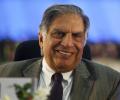
'I think some of us, like Mukesh Ambani, myself and those of us who head industrial units, ought to really focus on what we can really do to make the world a safer place, maybe 50 or 100 years from now.' 'For instance, how can we deal with climate change and global warming, right now?' 'The effects of it may not be felt now; in fact, we may pay a price for it today, but it will help the generations to follow.'

Maruti Suzuki posted a marginal increase in January and the likes of Hyundai, Ford and Mahindra & Mahindra reporting a single-digit growth.
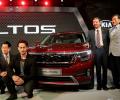
What explains India's love affair with SUVs? They are not exactly "value for money" -- the watchword for brands across segments -- nor always practical. Is it for the badge value? Or the butch imagery associated with SUVs? Maybe both, says Alokananda Chakraborty.

Implementation of the Seventh Pay Commission recommendations, One Rank, One Pension are the other triggers going ahead, analysts say

According to the data released by Society of Indian Automobile Manufacturers (SIAM), domestic car sales in October this year stood at 1,59,036 units as compared to 1,63,199 units in the same month of 2013.

Almost every company launched a new product in FY16.

Maruti has announced it will phase out diesel variants from April 1, 2020, when stringent BS VI norms take effect
The 12-hour bandh was called by the Trinamool Congress against farmland acquisition for a Tata Motors project.

This is the seventh straight month of growth
Posting a remarkable turnaround after a dip in sales for three previous months, Maruti Suzuki sold a record 67,005 vehicles in the domestic market--the highest ever in a month in its 25-year history--reflecting a 5.6 per cent growth over January 2008. The previous sales record was 65,216 units, notched up in November 2007, when there was no slowdown.

The Tata Nexon and Mahindra Marazzo ace the safety ratings, but what about other Made in India cars? How safe is the car you drive?
Maruti Udyog Ltd has been rated the 'most trusted' passenger car company of the country, according to a survey by global research firm TNS.

India is a market for low-priced cars with low running costs. The global majors don't have models that fit the bill; only Maruti and Hyundai have successful entry-level models, observes T N Ninan.
